
With the rise of industrialism in the mid-nineteenth century, Americans viewed outdoor spaces as a way to combat the stress of daily life. This resulted in the establishment of carefully designed city parks, such as Nashville’s Glendale Park which opened in the 1880s. The park movement soon began raising awareness of protecting land from overdevelopment – a goal that could be achieved through state and national parks.

A display of Division of State Parks tourist folders, May 6, 1958. Tennessee Department of Conservation Photograph Collection, 1937-1976. ID: 22941.
State Geologist Wilbur A. Nelson first suggested candidates for Tennessee state parks in his 1919 annual report to the General Assembly. Advocating for the conservation of public land, he identified Reelfoot Lake, Herbert Domain, and Brushy Mountain as sites that could serve as the foundation of a state park system. Nelson believed that by protecting such areas as state parks, they would be “dedicated to the generations yet to come.”
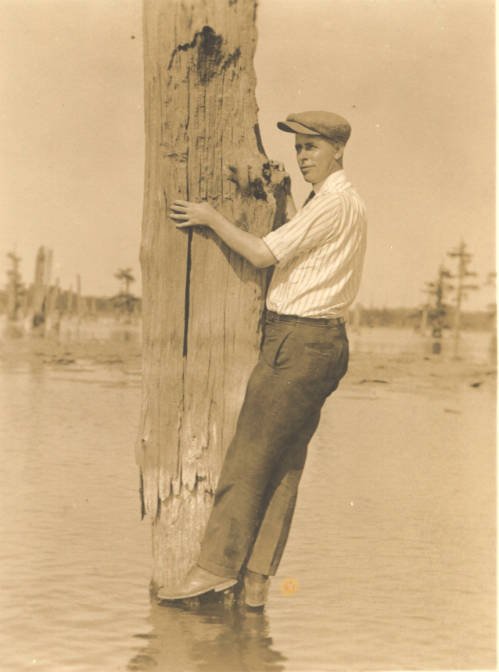
State Geologist Wilbur A. Nelson, seen here at Reelfoot Lake, later served on the board for the National Conference of State Parks, 1922. Library Photograph Collection. ID: 4126.
In the 1920s and 1930s, state agencies identified areas representative of Tennessee’s natural landscape that also held the potential for recreational use, including Fall Creek Falls and Montgomery Bell. Already popular among locals, many sites had existing recreational areas and facilities built by New Deal programs and the National Park Service. The State of Tennessee began acquiring these areas in 1937 when Governor Gordon Browning signed the “Organic Act,” officially establishing Tennessee State Parks.
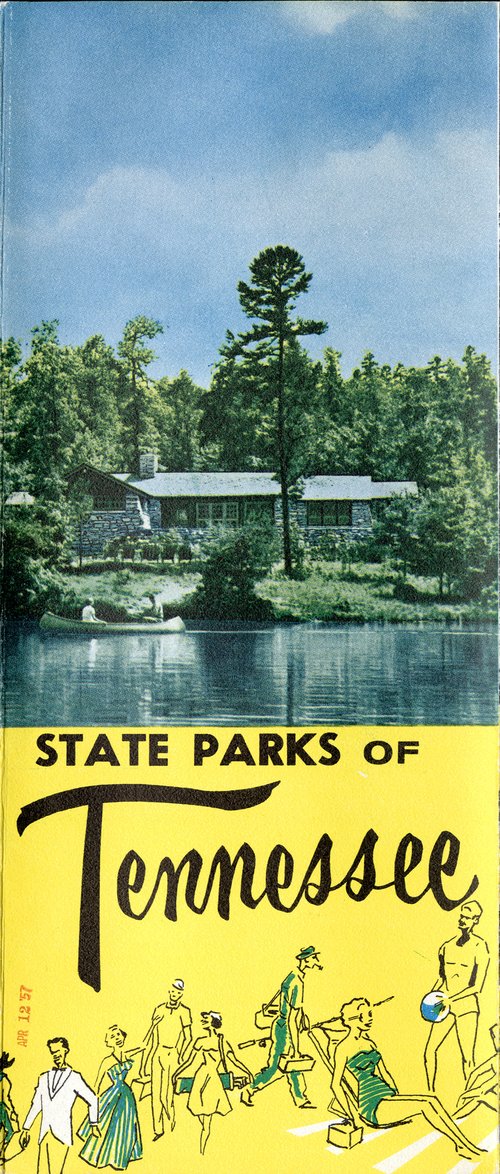
State Parks of Tennessee, 1957. Tennessee State Parks Brochures. ID: 49666.

A display of Division of State Parks tourist folders
“State Parks of Tennessee” brochure
Wilbur A. Nelson at Reelfoot Lake