
To help stimulate the economy after the Great Depression, President Franklin Delano Roosevelt and Congress created a series of programs as part of the New Deal. In Tennessee specifically, the Tennessee Valley Authority, Civilian Conservation Corps, and Works Progress Administration helped unemployed men, many between ages 17 and 23, boost infrastructure, conserve land, and develop the areas that would become Tennessee’s first state parks.
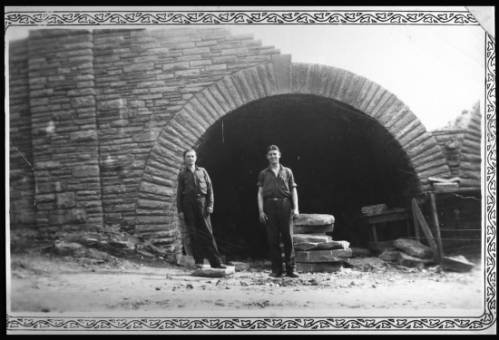
CCC workers build a bridge and dam in Cumberland Mountain State Park, 1930s. Looking Back at Tennessee Photograph Collection. ID: 7139.
Civilian Conservation Corps (CCC)
Congress created the CCC in 1933 to provide work for the unemployed. Tennessee was part of the Fourth Corps Area, which employed about 70,000 Tennesseans from 1933 until its end in 1942. These workers built lookout houses and towers, erected telephone lines, built roads, constructed dams for erosion control, and fought and prevented forest fires. CCC enrollees were instrumental in building and maintaining Tennessee’s first state parks.
The CCC helped complete work for at least 19 Tennessee parks, including Pickett, South Cumberland, T.O. Fuller, Montgomery Bell, Booker T. Washington, Pickwick Landing, and Cumberland Mountain.
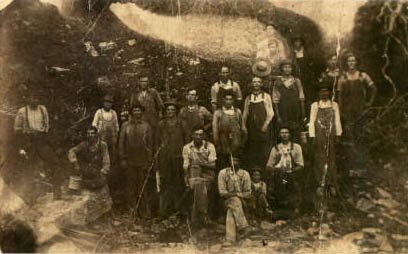
WPA workers at Standing Stone State Park, about 1935. Archives Photograph Collection. ID: 30677.
Works Progress Administration (WPA)
Established in 1935, the WPA did similar work as the CCC until its end in 1943. The WPA provided jobs to unemployed workers on public projects, including building roads, civic infrastructure, and parks. Cedars of Lebanon was established from reclaiming approximately 9,000 acres of deforested lands for the WPA to replant and develop into a park. Similarly, the WPA helped reforest and stop soil erosion at Standing Stone, along with building 17 cabins.
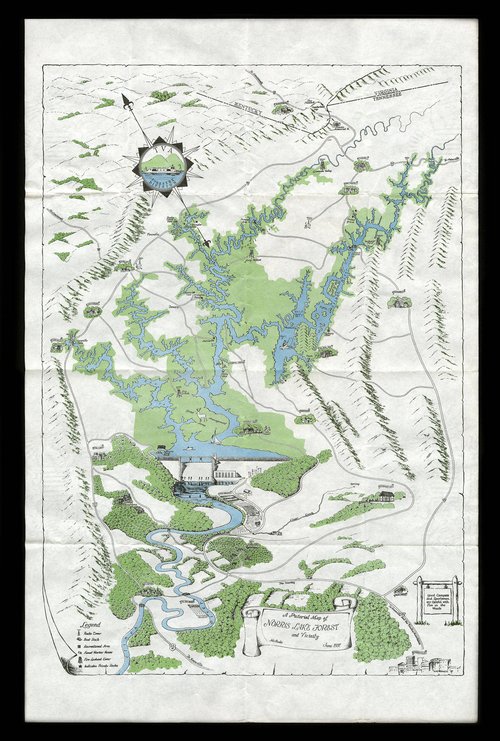
Pictorial map of the area around Norris Lake, 1937. RG 82: Tennessee Department of Conservation Records 1919-1987. ID: 43376.
Tennessee Valley Authority (TVA)
President Roosevelt created the TVA in 1933 to mitigate unemployment, provide flood control, build infrastructure for electrification, and to reforest the Tennessee Valley. Norris Dam was the first TVA dam built, creating Norris Reservoir. The TVA used the reservoir area to create several recreational parks that became Cove Lake and Big Ridge.
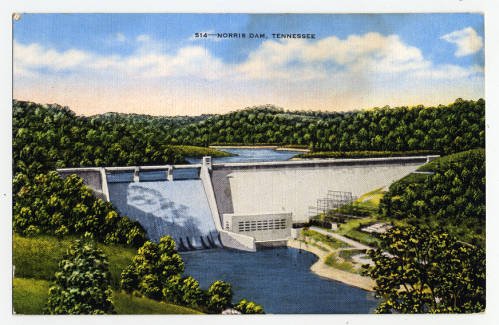
Norris Dam, undated. Tennessee Postcard Collection. ID: 32850.
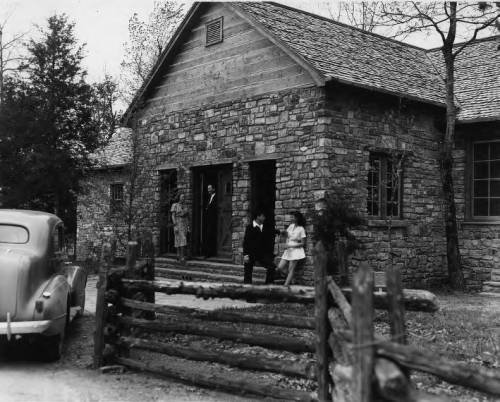
Park lodge built by the WPA in Cedars of Lebanon State Park, 1938. RG 82: Tennessee Department of Conservation Photograph Collection, 1937-1976. ID: 21983.
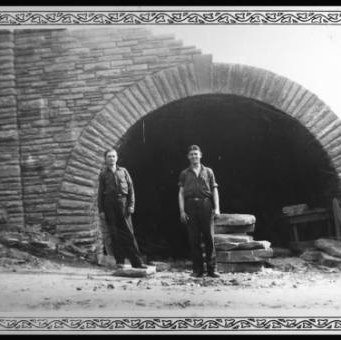
CCC workers build a bridge and dam in Cumberland Mountain State Park
Park lodge built by the WPA in Cedars of Lebanon State Park
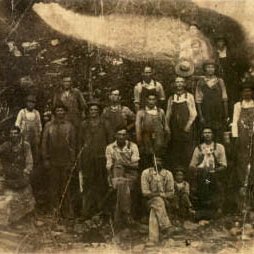
WPA workers at Standing Stone State Park
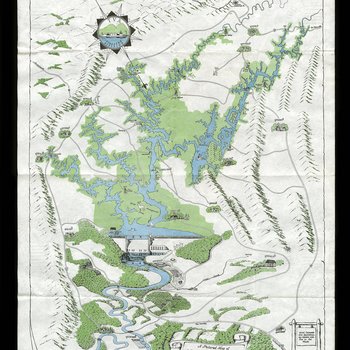
Pictorial map of the area around Norris Lake
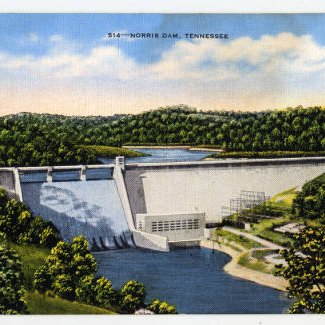
Norris Dam